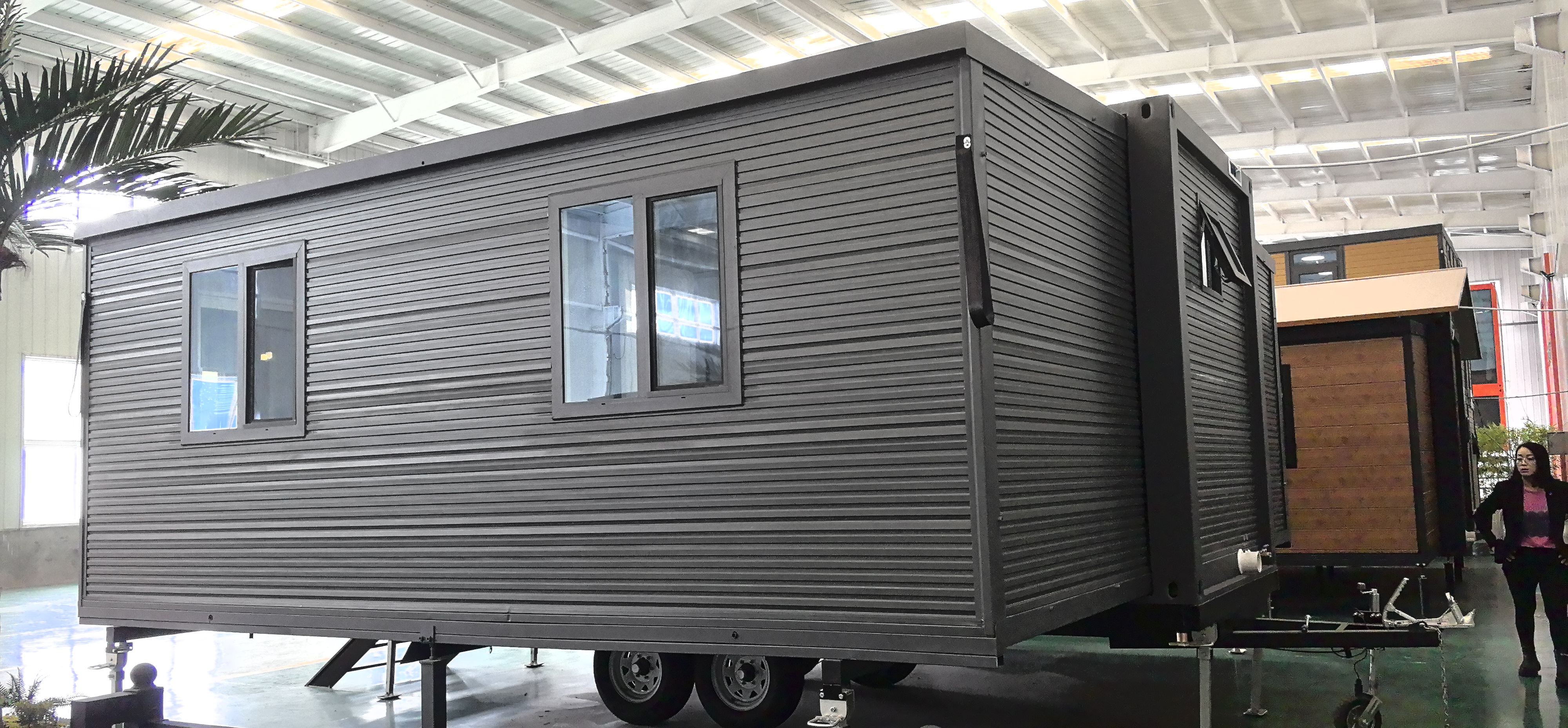
Intensive policy support has cleared key obstacles for the market and constitutes the core pillar for business opportunities. In 2025, California launched the "Fast Housing Package", which includes more than 20 bills. By streamlining approval processes, exempting environmental assessments in some areas, and optimizing building permit handling, it has significantly shortened the development cycle of California modular housing. Meanwhile, the new ADU (Accessory Dwelling Unit) Act has further relaxed restrictions, allowing multi-family properties to construct more independent modular ADUs without replacing or reconstructing parking spaces, opening up space for the large-scale development of this segment.
In addition, California's stringent green building standards (CalGreen) have promoted the upgrading of modular housing towards energy conservation and low carbon, creating an incremental market for environmentally friendly material suppliers that meet CalGreen modular building requirements.
The structural explosion of market demand has laid a solid foundation for the realization of business opportunities. On the one hand, California faces a housing shortage of 7.3 million units, and high housing prices have made low-cost, high-efficiency affordable modular construction a rigid demand solution. Compared with traditional construction, its construction cycle is shortened by more than 40%, cost is reduced by 20%-30%, and annual sales exceeded 4,000 units in 2022.
On the other hand, demand for diversified scenarios continues to expand: in the characteristic accommodation market during peak tourist seasons, park-style modular housing has become a popular choice on platforms such as Airbnb due to its rustic style, and related homestays in the Los Angeles metropolitan area drove $4.4 billion in economic activity in 2023; in the field of ecotourism, environmentally friendly modular housing equipped with solar energy and rainwater harvesting systems is highly favored; in urban renewal, container housing for ADU has become the preferred choice for commercial spaces and transitional housing due to its high flexibility.
Clear business opportunity directions are concentrated in three major areas: first, the prefabricated ADU segment market, which can focus on products combining standardization and customization to meet homeowners’ needs for rental income growth and low-cost expansion; second, characteristic scenario solutions, developing lightweight, high-aesthetic modular accommodation products for tourist attractions and ecological camps, and linking with short-term rental platforms to achieve premium pricing; third, green supply chain supporting facilities, developing core components such as energy-saving materials and integrated water and electricity systems that meet CalGreen standards, and entering key links in modular housing production.
In the future, with technological iteration and policy deepening, business opportunities in California's modular housing market will further extend to high-value-added areas, becoming a highly potential investment track.
At the market level, California modular housing is highly favored due to its advantages of low cost and high efficiency. Its on-site work volume is reduced by 80%, which can effectively alleviate the contradictions of high housing prices and tight land resources in California. Representative enterprises such as Villa and Factory OS have emerged in core areas such as the San Francisco Bay Area and Los Angeles. Through digital design and standardized production, they provide full-process services from scheme design to on-site assembly, and the cost per unit of some projects can be controlled at $383,000, much lower than the average cost of $700,000 for traditional affordable housing.