When houses are assembled on an assembly line like cars and then transported to their destination for rapid construction, a once imaginative concept in the construction industry is becoming a practical solution to America's housing crisis. In Boulder, Colorado, USA, the modular housing project at Ponderosa Mobile Home Park is progressing at a brisk pace. Amidst the towering cranes, this livelihood project, jointly built by Flatirons Habitat for Humanity and the Boulder Valley School District's Apex Program, not only gives local homeless residents hope for stable housing but also, taking the standardized production of BoulderMOD's modular factory as a model, outlines the broad opportunities of modular housing in advancing affordable housing construction.
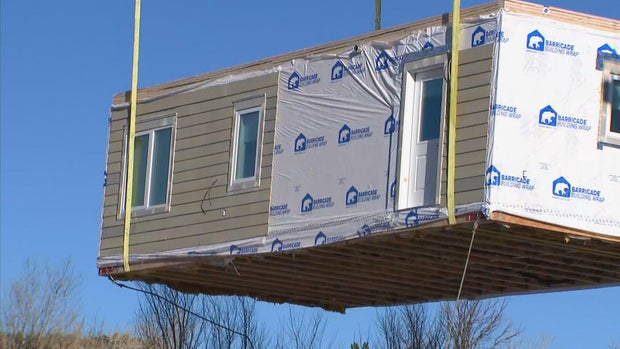
A new round of housing construction projects in Boulder is progressing
Colorado's housing predicament is a microcosm of America's national housing crisis. Data shows that the number of homeless people in the state surged by 39% in 2023 compared to the previous year, a growth rate far exceeding the national average. Looking at the entire country, a 2024 report from the U.S. Department of Housing and Urban Development (HUD) revealed shocking figures: the national homeless population has climbed to 771,800, a record high, equivalent to 23 out of every 10,000 people being homeless. This number represents an 18.1% increase from 2023. Under the combined pressures of high inflation, high rents, and the end of the eviction moratorium during the COVID-19 pandemic, a large number of low- and middle-income families have been squeezed out of the housing market, leading to a continuous expansion of the housing gap. For Colorado, although there are no precise statewide housing gap data, clues can be found in the production capacity of modular construction enterprises—a modular housing builder in the state delivered over 500 units in just three years and is still operating at full capacity to meet demand, which fully confirms the urgent market need.
Boulder's Apex Program is a successful practice of modular housing accurately meeting people's livelihood needs. This project, with the participation and support of district students in its preparation and construction, adopts modular housing manufactured by BoulderMOD, giving full play to the advantages of "factory prefabrication and on-site assembly." Compared with traditional construction methods, the core competitiveness of modular housing is evident: on the standardized assembly line in the factory, all processes—from floor laying and frame construction to roof installation, pre-embedding of water and electrical pipelines, and assembly of interior decorations such as kitchen countertops—can be completed in advance. The prefabrication cycle for a single house is only 5 to 7 days, and stable production capacity can be maintained even during Colorado's cold winters. After being transported to Ponderosa Mobile Home Park, on-site assembly and move-in can be completed in just 6 weeks, shortening the construction period by more than 60% compared to traditional buildings. Rodney Erickson, a local resident, expressed the project's value with emotion: "Most of my neighbors cannot afford ordinary housing. Without this project, many of them might never have a home of their own. We are all beneficiaries of this project."
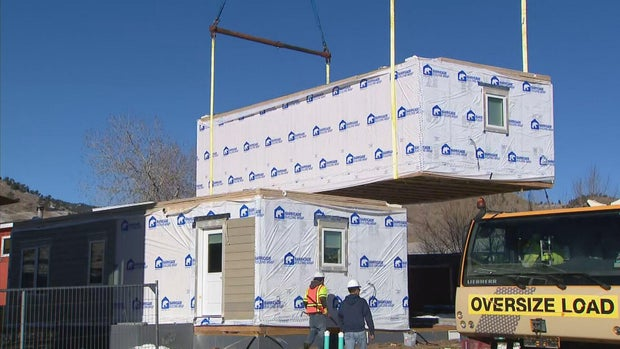 The affordable housing project constructed by Flatirons Habitat for Humanity
The advantages of modular prefabricated housing go far beyond "speed"; they lie more in their precise alignment with the core needs of affordable housing. Firstly, cost controllability is strong. Standardized assembly line production greatly reduces labor costs and material waste, while avoiding weather impacts and construction delays in on-site construction, making housing prices more accessible to low- and middle-income families. Practice in Colorado has shown that such modular housing can be built as single-family residences or combined into multi-family apartments, flexibly adapting to different living needs. Secondly, it combines environmental friendliness and practicality. The modular housing produced by BoulderMOD focuses on energy-saving properties, and practical application cases in Colorado more intuitively confirm the practical value of prefabricated housing—a local resident purchased a double-wing expandable house from China for his wife as an office. This double-wing expandable container, produced by Zhongchengsheng Modular Housing in Suzhou(ZCS Modular House), China, only requires 1 to 2 days to complete steps such as unfolding, fixing, and connecting water and electricity after being delivered, enabling immediate move-in. Its convenience and practicality have been fully demonstrated. Thirdly, the social collaboration value is significant. In the Apex Program, district students participate in factory preparation and housing construction, not only reserving practical talents for the modular construction industry but also making the livelihood project a carrier for the collaborative participation of social forces, providing a replicable model for governments, non-profit organizations, and educational institutions to jointly address housing issues.
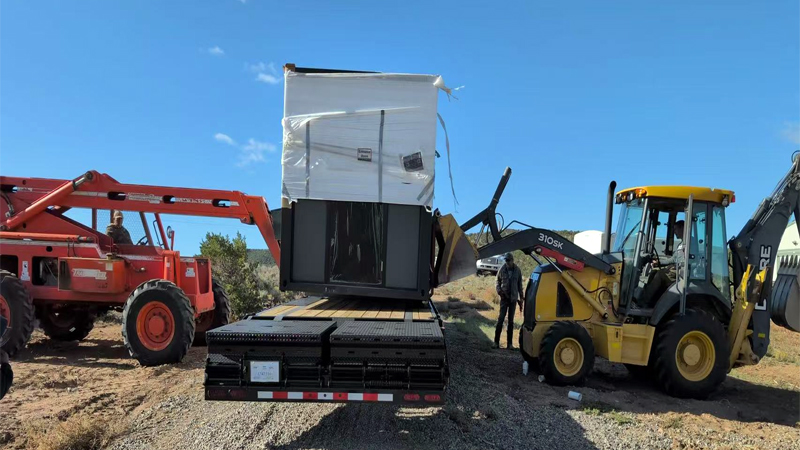
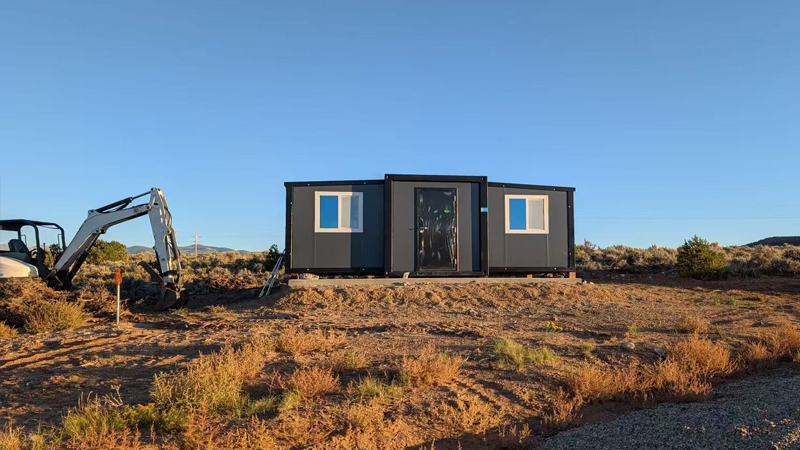
The double-wing expandable modular home has been successfully commissioned
|
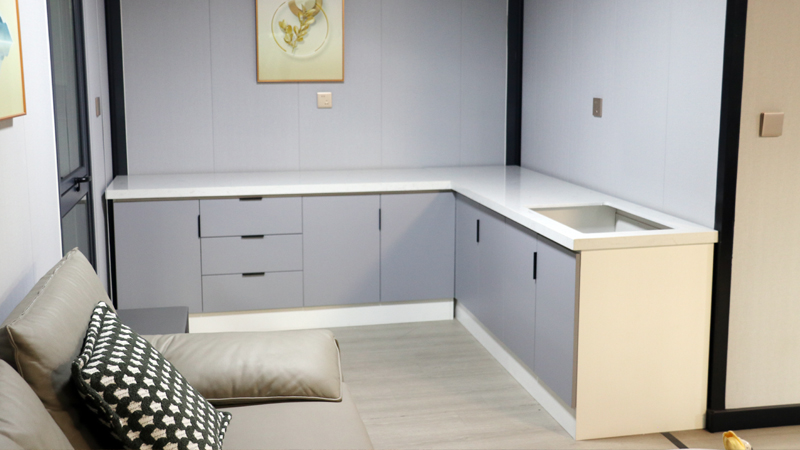
Open-plan kitchen and living room |
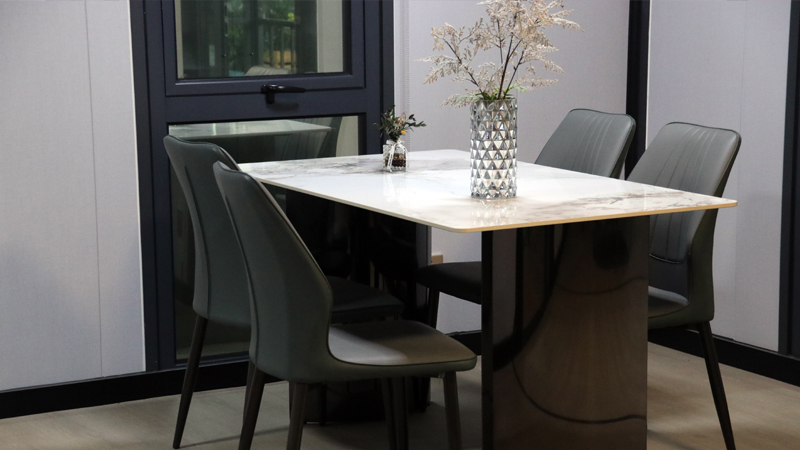
A dual-purpose table ideal for both work and tea time |
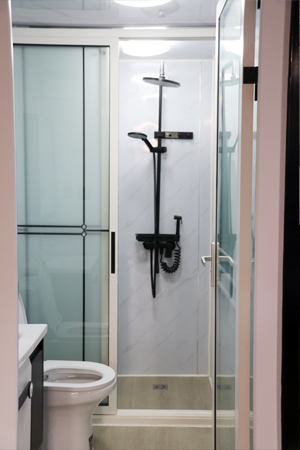
bathroom |
From the perspective of industry development trends, the market recognition of modular housing is continuously improving, providing broader room for imagination in solving the housing predicament. Data shows that the national transportation volume of modular housing in the United States reached 100,000 units in 2024, an increase of nearly 70% compared to 60,000 units 10 years ago. This growth trend is particularly prominent in Colorado. Beyond the field of affordable housing, modular housing has begun to extend to diverse scenarios such as apartments and country villas: in urban core areas, modular apartments can quickly fill the gap in rental housing; in rural areas, customized modular villas can balance living needs with the integration of natural landscapes. Compared with 3D printed buildings, which are still in their infancy and face problems such as expensive equipment and lack of standards, modular housing has formed a mature industrial system and become a better solution to the current housing crisis.
Of course, the large-scale promotion of modular housing still faces challenges such as inconsistent construction standards, but the practice of Boulder's Apex Program has fully proven its feasibility and value. Faced with the housing expectations of 770,000 homeless people across the country and the continuously expanding housing gap in Colorado, modular housing, with its core advantages of "rapid construction, cost control, and green energy conservation," is undoubtedly a "blessing" for affordable housing construction. When more houses roll off the assembly line and more social forces participate in the collaborative system of modular construction, the solution to America's housing crisis will usher in a new breakthrough. Boulder's exploration is precisely a vivid starting point for this industrial transformation—and also an opportunity for modular housing.