Recently, a video of 37-year-old former child star Taylor Chase living on the streets of Los Angeles has gone viral on social media. From being a household name during his Home Alone days to living in destitution next to a cardboard box, his downward trajectory is not an isolated case. Even more shocking is the truth revealed by data: among approximately 770,000 homeless people in the United States, nearly 70% were once programmers, veterans, or small business owners. The "financial cliff" has emerged as a brutal economic concept—one that vividly depicts the middle class’s precarious proximity to ruin. Beyond Taylor Chase, the story of a former Silicon Valley programmer is most representative: earning $450,000 annually, yet trapped in a financial precipice that plunged his life into darkness, burdened by $12,000 monthly mortgage payments, $3,000 car loan installments, and the constant threat of sudden cash flow disruptions. A single layoff or medical crisis can plunge them from office buildings to underpasses in just six months.
 |
 |
The essence of this "financial cliff" lies in structural flaws in America’s housing system: the inefficiency of traditional construction has artificially inflated barriers to affordable housing. Prefabricated housing, as an industrialized production model, is systematically lowering this risk threshold. Among its variants, modular homes—the advanced form of prefabricated construction—stand out as the most pragmatic technical solution.
I. Prefabricated Production Redefines the Cost Paradigm
The core breakthrough of prefabricated homes lies in cost control: factory-standardized production reduces construction costs by 15% to 30%. This industrial logic creates a critical financial buffer: monthly mortgage payments are cut by $500 to $1,000, and families gain an extra 12 to 18 months to save for down payments.
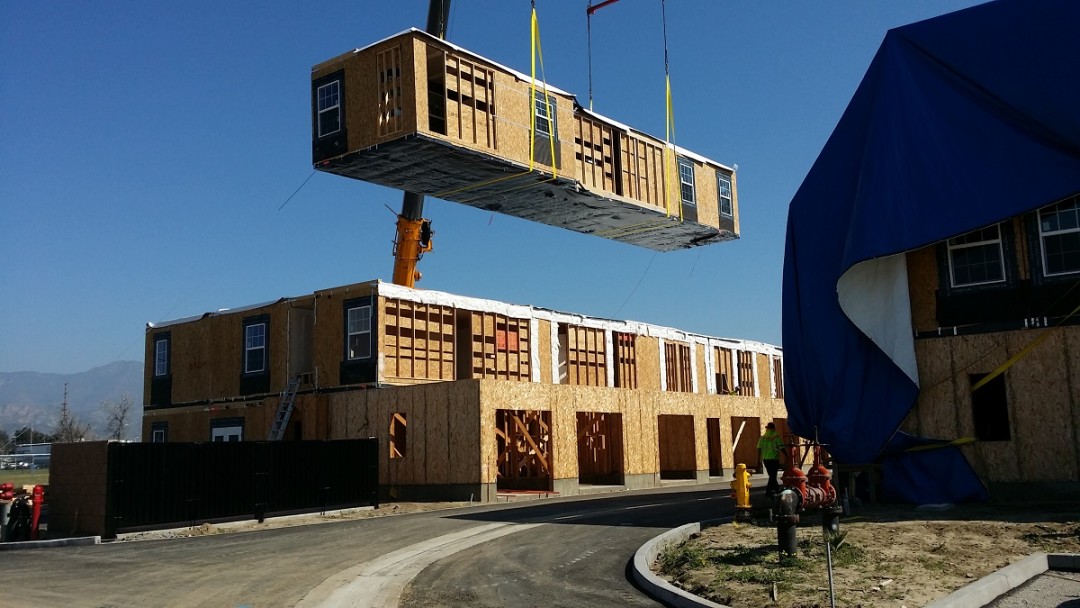
Modern modular home technology takes this further. Eighty-five percent of construction is completed in factories, slashing on-site assembly time by 70%. This speed advantage is a lifeline for households on the financial brink: while traditional construction’s 12-month timeline may deplete unemployment benefits, prefabricated homes can be move-in ready in 2 to 3 months, providing stable shelter before a crisis escalates.
II. Modular Technology Builds a Resilient System
Modular homes are evolving from "building products" into "crisis response systems." Their standardized modules can be rapidly combined into diverse floor plans to meet multifaceted needs:
• Affordable prefabricated housing projects in New York State have proven that rents in modular communities are 40% lower than market rates.
• California uses modular units for transitional housing, costing 37% less than traditional homeless shelters.
• 3D-printed prefabrication technology has reduced the cost of individual post-disaster housing units to under $50,000.
These prefabricated housing solutions are more than social initiatives—they represent sustainable business models: a stable yield of 5% to 7% is attracting a surge of impact capital.
III. Industrial Logic Reshapes the Safety Net
On a deeper level, modular homes signify a paradigm shift in housing supply. They demonstrate that:
1. Prefabricated production can break the 50-year productivity stagnation in the construction industry.
2. Modular design unifies quality and affordability through scalability.
3. Rapidly deployable prefabrication systems can be transformed into social safety nets.
When Seattle built a veterans’ community in 6 weeks using modular technology, and Los Angeles intervened withprefabricated units to address street crises before they escalated, we witnessed more than a construction revolution—it was an evolution in social philosophy: a shift from "survival of the fittest" to "preventing the fall."
Conclusion: The Prefabricated Future
The story of programmers trapped by exorbitant mortgages exposes the systemic fragility of modern life. Modular homes and the prefabricated construction revolution they represent are resetting society’s safety baseline: making "having a roof over one’s head" no longer a high-risk leveraged bet, but an affordable basic guarantee.
In an era of uncertainty, prefabricated homes offer a dual solution—lowering housing costs through industrialization and enhancing adaptability via modular design. This is more than progress in housing technology; it is a practice in building a resilient society. A society that enables upward mobility while laying down safety nets is truly sustainable.