2026 is the final year of Gavin Newsom’s tenure as California Governor, and even more importantly, a crucial window of opportunity for this ambitious politician to pave the way for his presidential primary bid using his gubernatorial platform. Over the past seven years, many of his lofty ambitions have not been fulfilled; in contrast, the housing crisis has become increasingly prominent. When he ran for governor in 2018, he promised to build 3.5 million new housing units by 2025, but by 2024, less than 120,000 units had been completed, accounting for only one-fifth of the annual target. Meanwhile, the number of homeless people in California exceeds 187,000, accounting for a quarter of the total in the United States. Even with more than $24 billion invested in governance, the problem has continued to worsen. Under the pressure of the presidential primary, Newsom urgently needs an achievement that can be quickly implemented and deliver tangible results, and modular housing may be the optimal solution to solve his housing dilemma and achieve a performance breakthrough. The modular housing market is about to usher in a major boom in California.
I. The Housing Issue: A "Must-Win Battle" for the Presidential Primary – Newsom’s Performance Anxiety
For Newsom, every policy initiative in his final year in office revolves around the "presidential primary." As Democratic political consultant Kelly Calkin put it, voters across the country are under pressure from the cost of living, and housing affordability is one of the core pain points. Census data shows that about 40% of California households spend more than one-third of their income on housing, making "housing burden" one of the most urgent demands of voters.
Compared with other policy goals, the housing issue is the easiest to break through and yields the fastest results, making it the most achievable "score item" on Newsom’s performance list. The universal healthcare program has been forced to suspend due to budget deficits; commitments such as paid parental leave and subsidized childcare slots have not been fulfilled as scheduled; the development of green energy faces the dilemmas of high costs, long cycles, and great controversy, and may alienate some voters. In contrast, the solutions to the housing issue are more specific and the implementation path is clearer. As long as the housing supply can be quickly increased, it can directly ease the pressure of living costs, improve the homeless situation, and form "visible and tangible" achievements to accumulate public support for his presidential primary bid.
More importantly, Newsom’s previous measures to address homelessness (such as clearing homeless encampments) have been criticized as "treating the symptoms rather than the root cause." Only building new housing can fundamentally solve this predicament and restore his political reputation. Therefore, in the final sprint year of his tenure, Newsom will inevitably take housing construction as the core focus, and modular housing is precisely the best path that meets his demand for "quick performance results."
II. Modular Housing: The Optimal Solution to California’s Housing Shortage
The slow progress of housing construction in California is mainly due to the inefficiency and high cost of traditional construction methods. On-site construction is greatly affected by labor, weather, and supply chains, with a construction period of 6 to 12 months, and the construction cost remains high. Coupled with local residents’ resistance to housing density, high interest rates and other factors, the housing supply is difficult to increase. The core advantages of modular housing precisely address these pain points, making it a key breakthrough to solve California’s housing shortage.
First, factory prefabrication and efficient assembly significantly shorten the construction period. The core logic of modular housing is "building houses in factories and assembling them on-site." Housing components are prefabricated in a standardized manner in factories, unaffected by outdoor environments, enabling mass production. Only component assembly is required on-site, which can shorten the construction period by more than 50%, and some projects can even achieve "assembly in one week and delivery in one month." As early as 2018, the graduate dormitory project of the University of California, Berkeley, undertaken by CIMC Modular, completed all module assembly in one week and overall completion and delivery in three months, fully demonstrating the feasibility and efficiency of modular housing in California. Compared with traditional construction methods, modular housing allows Newsom to see a significant increase in housing supply within a short year and quickly fulfill his campaign promises.
ZCS(Zhongchengsheng) Modular Housing can build a five-story modular residential building that can accommodate 50 households. After confirming the drawings, the factory prefabrication of modular components only takes 2 months to complete; plus a 30-day transportation cycle and a 15-day on-site construction cycle, the entire project can be completed in as short as 4 months. Its overall production capacity is far more than that. The completion speed of modular housing will greatly increase the annual number of housing units built.
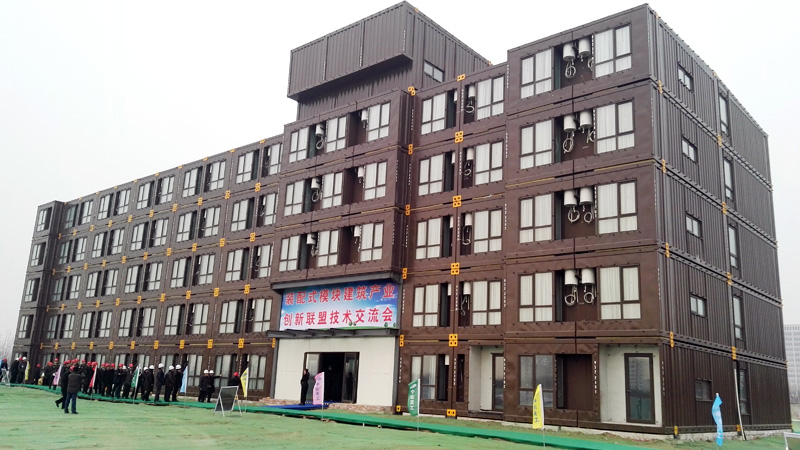
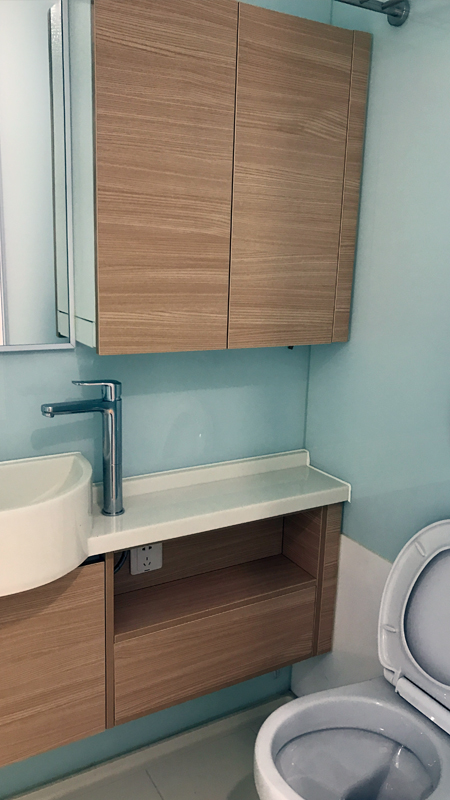
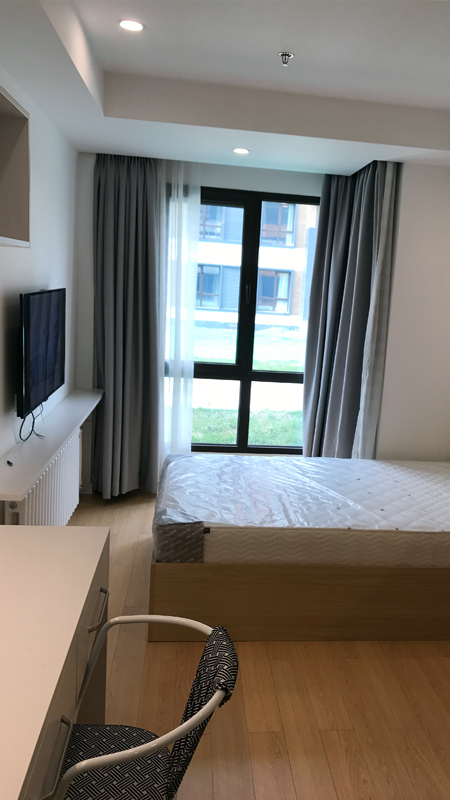
prefabricated modular apartments
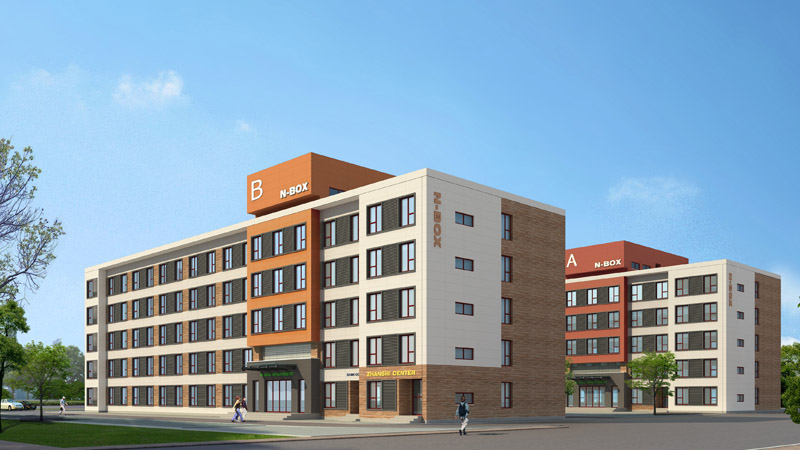
modular apartment units
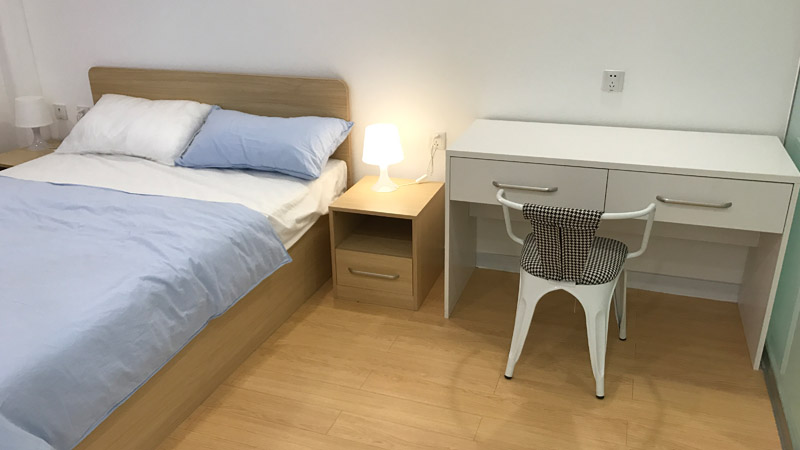
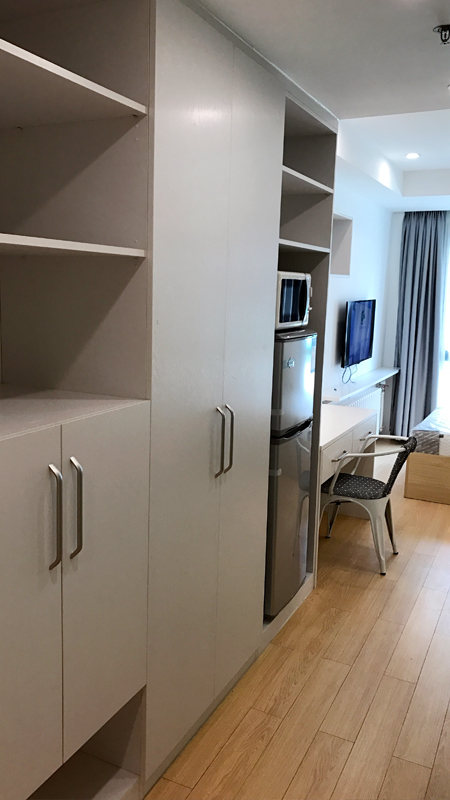
Interior of the apartment unit
 |
 |
 |
Second, controllable costs and adaptable needs are in line with the current budget deficit situation. The Newsom administration is facing a severe budget deficit and cannot afford large-scale, high-cost housing construction projects. Through standardized factory production, modular housing can reduce on-site labor input and material waste, reducing the overall construction cost by 20% to 30%. At the same time, it can flexibly adapt to the needs of different scenarios: it can not only build low-cost affordable housing and homeless shelters, but also create residential buildings that meet California’s strict green standards and seismic requirements. It can not only meet the housing needs of low-income groups, but also adapt to California’s building codes, achieving the dual advantages of "low cost, high quality and multi-scenario."
Third, it solves supply bottlenecks and makes up for the shortcomings of traditional construction. Traditional local modular buildings in California are mostly wooden structures, with small enterprise scales and low output, which are difficult to meet the demand for large-scale construction. Steel-structured modular housing, which has been verified by practice, can break the misunderstanding that "modular housing is low-end" and has large-scale production capacity, which can quickly fill the gap in California’s housing supply. In addition, modular housing does not require large-scale occupation of on-site land, which can effectively ease local residents’ resistance to housing density and further promote the implementation of housing projects.
III. Modular Housing Embraces Dual Dividends of "Policy + Market"
Newsom’s demand for performance is bringing unprecedented development opportunities to California’s modular housing industry, forming a virtuous cycle of "policy-driven, market-driven, and manufacturers benefiting." This year will surely become a crucial year for California to shift to modular housing.
From the perspective of policy opportunities, to sprint for the presidential primary, Newsom is likely to introduce a series of policies to support the development of modular housing. California has previously passed bills such as SB1211 and AB2488 to accelerate housing approval and promote housing supply. In the future, it is expected to further optimize the approval process for modular housing, increase financial subsidies, and even purchase modular housing in batches through government procurement for the construction of affordable housing and homeless shelters, removing policy obstacles for the large-scale development of modular housing.
From the perspective of market opportunities, California has a huge housing gap and strong sustained demand. According to Newsom’s original target of 3.5 million housing units, there is still a huge supply gap. The efficiency and cost advantages of modular housing will become the core force to fill this gap. At the same time, with the improvement of Californians’ awareness of modular housing and the popularization of green building and efficient construction concepts, the market acceptance of modular housing will continue to increase, forming large-scale market demand.
From the perspective of manufacturers’ opportunities, California’s modular housing market is in a window period of "insufficient supply and surging demand." Local wooden modular enterprises in California are difficult to meet the demand for large-scale construction. Modular manufacturers with large-scale production capacity and technological advantages (especially steel-structured modular manufacturers) will usher in explosive growth in orders. At the same time, California’s strict building standards and market demand will also force manufacturers to improve their technological level, promote the upgrading of modular housing to high quality and intelligence, and further expand market space. The previous success of CIMC Modular in the Berkeley dormitory project has laid the foundation for Chinese and international modular manufacturers to enter the California market, and more enterprises are expected to layout and share industry dividends this year.
IV. Modular Housing is the First Choice to Solve Newsom’s and California’s Housing Problems
Overall, it is an inevitable trend for California to shift to modular housing this year. On the one hand, Newsom’s performance anxiety in his final year in office and his political demand for the presidential primary force him to quickly solve the housing shortage problem, and modular housing is the only optimal path to achieve "quick results, controllable costs and remarkable effects." On the other hand, the technological advantages of modular housing, California’s market demand and policy orientation all provide solid support for its large-scale development, and there have been successful cases verifying its feasibility.
For Newsom, promoting modular housing can not only quickly increase housing supply, ease the homeless problem, create an impressive performance card, and pave the way for his presidential primary bid. For the modular housing industry, this is a golden opportunity to "seize the policy opportunity and expand market space," and manufacturers will directly benefit from order growth and technological upgrading. In 2026, modular housing will become the core force in California’s housing construction, helping Newsom achieve a performance breakthrough and driving California’s modular housing industry to usher in explosive development, opening a "new modular era" of California’s housing construction.