In February 2026, the U.S. Senate and House of Representatives passed the first major housing supply bill in decades, explicitly designating modular/prefabricated housing as the core solution to address the U.S. housing shortage. Among them, modular apartments have become a key supported category under the policy due to their high adaptability. The bill promotes comprehensive reforms to housing construction standards, zoning regulations, loan policies, and approval processes. This policy not only reshapes the structure of the U.S. residential market but also brings historic, structural, and irreversible opportunities to the global modular housing industry and Chinese modular housing manufacturers, paving the way for the large-scale overseas expansion of modular apartments.
The core value of this U.S. housing bill lies in transforming modular housing from non-standard customized construction into formal standardized industrial products. As the core carrier of rigid demand, modular apartments have become direct beneficiaries of policy dividends, which serves as the fundamental premise for all market opportunities.
The federal government has uniformly formulated zoning best practices, construction codes, loan evaluation standards, and structural requirements for multi-story stacked residential buildings. Among the most groundbreaking provisions is the abolition of the mandatory permanent chassis requirement for modular housing—traditional regulations mandated that factory-built homes be equipped with mobile chassis (originally intended for transportation), but most modular housing no longer moves after installation. This redundant structure added thousands of dollars to the cost per unit. Following the implementation of this provision, the cost per modular housing unit is directly reduced by 5,000-10,000, further highlighting the cost-performance advantage of modular apartments and making them a key catalyst for large-scale popularization. Driven by this policy package, both modular housing and modular apartments have achieved unified standards, unified dimensions, unified interfaces, and unified acceptance, leading to three key market changes:
First, on the demand side, scattered customization has shifted to large-scale rigid demand. Affordable housing, rental apartments, and TOD (Transit-Oriented Development) residential buildings near transportation hubs have become mainstream scenarios. Among these, modular apartments have emerged as the core choice for government bulk purchases and developers' mass acquisitions due to their high cost-effectiveness (with further cost reductions after the chassis abolition) and rapid delivery advantages. Bulk procurement has completely replaced project-based customization—this shift has brought both modular housing and modular apartments into mainstream consumer view.
Second, the financing side has been fully liberalized. Loan accessibility, valuation recognition, and liquidity have significantly improved. Special loan policies targeting modular apartments and various types of modular housing have been implemented, and banks have established clearer valuation systems for modular apartments, further stimulating procurement willingness among consumers and developers.
Third, the supply side has achieved replicability, mass production, and stockability. The industry has completely abandoned the inefficient model of "one project, one design; one project, one production." In particular, the standardized production of modular apartments has made the large-scale, fast-turnover operation of modular housing a reality, ushering in a new stage of industrialized development.
In short, without standardization, there can be no overseas warehouses; without standardization, there can be no local assembly; without standardization, both modular housing and modular apartments can only remain in traditional OEM (Original Equipment Manufacturing) for foreign trade. Through key measures such as unifying standards and eliminating redundant chassis, the U.S. bill has effectively made the standardization and scaling of modular housing and modular apartments a reality, removing core barriers to industry development.
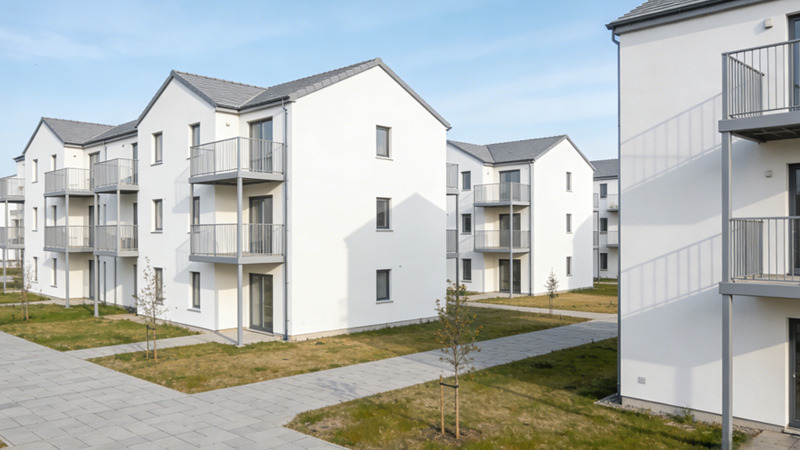
Driven by both standardization and policy, global modular housing enterprises are entering a golden period of development. Modular apartments have become the core focus for enterprises to seize market share, with key opportunities concentrated in three directions:
On the product front, dual upgrades in standardization and scenario adaptation have been achieved. Following the abolition of the chassis requirement, multi-story stacked modular residential buildings have become mainstream (previously, the chassis structure limited the stability and economy of vertical stacking). As a core rigid-demand category, modular apartments are experiencing explosive growth. Enterprises can develop 3-5 universal standardized products based on modular apartment types such as studio apartments, two-bedroom units, and three-bedroom units, breaking the limitations of single-story products. Simultaneously, they can enter high-margin, high-value-added component tracks such as integrated bathrooms, integrated water and electricity systems, and turnkey modules to enrich the supporting ecosystem for modular housing and modular apartments, enhancing the living experience and product premium of modular apartments.
On the market front, the shift from project-based operations to bulk supply has occurred. To secure federal funding support, local governments will conduct large-scale purchases of modular apartments and various types of modular housing for affordable housing and rental communities. Government bulk procurement, large engineering orders, and dealer restocking have become mainstream models. Enterprises are no longer dependent on individual developers; instead, through the standardized supply of modular housing—especially modular apartments—they can achieve stable nationwide and cross-regional supply, establishing a sustainable profit model. The high-turnover characteristic of modular apartments further improves enterprises' capital efficiency.
On the capital front, valuation and financing capabilities have significantly improved. Policy dividends have boosted the prosperity of the modular housing industry. Enterprises focusing on core categories such as modular apartments are more likely to obtain equity financing, project loans, and supply chain financial support. They can concentrate resources on capacity expansion, R&D of modular apartment products, and overseas layout, forming stronger economies of scale to further consolidate their market positions in both modular housing and modular apartments sectors.
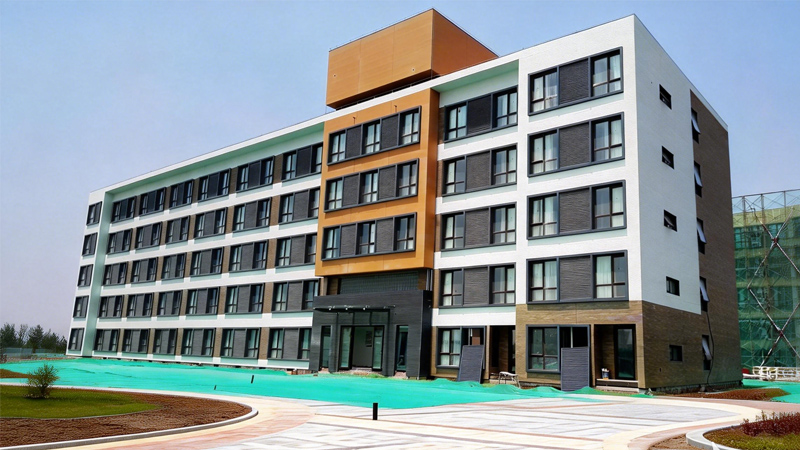
China boasts the world's most complete modular housing industrial chain, along with advantages in cost, capacity, and delivery efficiency. Against the backdrop of comprehensive standardization driven by the U.S. bill, Chinese modular housing manufacturers hold inherent competitive advantages in the modular apartment track, encountering unprecedented overseas expansion opportunities:
First, undertaking million-unit-level standardized orders for modular apartments to fully release production capacity. The U.S. faces shortages in labor and local production capacity, coupled with high factory construction costs. The large-scale housing gap created by the bill—especially the rigid demand for modular apartments—will be directly converted into sustained procurement demand for Chinese standardized modular housing and modular apartments. The 5,000-10,000 cost reduction brought by the chassis abolition further highlights the price advantage of Chinese modular apartments, driving Chinese manufacturers to shift from customized OEM to standardized mass production and achieve scale breakthroughs by focusing on the core category of modular apartments.
Second, standardization reducing transaction costs to achieve large-scale profitability. Unified U.S. federal standards eliminate the need for Chinese modular housing manufacturers to repeatedly adapt to local rules; a single certification enables nationwide sales of both modular apartments and various types of modular housing. In particular, the standardized design and production of modular apartments significantly reduce design costs, communication costs, and rework costs. Combined with the direct cost savings from the chassis abolition, profit stability is greatly enhanced.
Third, the formal establishment of the overseas warehouse + local assembly model. Only with standardized modular housing and modular apartment products, unified module sizes, and universal interfaces can overseas warehouse stockpiling, spot sales, and local rapid assembly become commercially viable. Leveraging the standardization advantages of modular apartments, Chinese manufacturers can deploy overseas warehouses to realize spot supply of modular apartments and achieve rapid delivery through local assembly, upgrading from "long-distance foreign trade" to "localized supply" to improve the delivery experience and customer satisfaction of modular apartments.
Fourth, dual-driver expansion through full-container exports and component exports. In addition to complete modular housing and modular apartments, demand for standardized components such as prefabricated wall panels, light steel frames, and integrated kitchen and bathroom units is also surging. These components are not only core parts of modular apartments but also high-margin products for independent export. Chinese modular housing manufacturers can leverage their industrial chain advantages to fully integrate into the U.S. mainstream residential supply chain, supplying both finished modular apartments, modular housing, and core component supporting services.
A fundamental business logic must be clarified: the prerequisite for deploying overseas warehouses and implementing local assembly is the formation of unified standards in the U.S. market and enterprises' ability to mass-produce standardized modular housing and modular apartment products.
In the era of non-standard customization, Chinese modular housing manufacturers could only engage in traditional foreign trade: U.S. real estate developers or dealers propose requirements → enterprises design → revise and confirm drawings → produce → sea freight → provide installation guidance and maintenance. This model is characterized by long cycles, thin profits, poor replicability, and limited scalability—especially for modular apartments and modular housing, where customized production could not achieve economies of scale.
However, driven by the U.S. bill's standardization push, the market logic has undergone a complete transformation:
Unified Standards → Mass Production of Standardized Modular Housing Products (e.g., modular apartments, benefiting from cost reductions via chassis abolition) → Overseas Warehouse Stockpiling (focusing on core standardized modular apartment products) → Spot Sales → Local Rapid Assembly → Repeat Restocking.
This is the only path for Chinese modular housing manufacturers to shift from passive order-taking to active supply, and from low-margin OEM to high-value brand overseas expansion—it is also the core logic for the large-scale overseas expansion of modular apartments.
Therefore, to truly seize this wave of dividends, Chinese modular housing manufacturers must build four core capabilities on the foundation of modular housing and modular apartment standardization:
Prioritize obtaining mandatory U.S. certifications such as ICC-ES, UL, and ASTM. Ensure that modular apartments and other modular housing products fully comply with U.S. standards for structure, fire resistance, environmental protection, water and electricity systems, and seismic resistance. This is a rigid threshold for entering the U.S. market and the foundation for the standardization of modular apartments and modular housing.
Focus on R&D of serialized standardized modular apartment products tailored to U.S. mainstream housing types, living habits, climatic conditions, and policy-supported scenarios (e.g., TOD housing, affordable housing). Simultaneously, cater to other rigid-demand modular housing products, fully leveraging the structural flexibility and cost advantages of "chassis-free design." Ensure modular apartments are suitable for mass production, stockpiling, stacking, and rapid assembly. Move away from reliance on customized projects and reduce costs while improving efficiency through the large-scale production of modular apartments.
Leveraging the standardization advantages of modular housing and modular apartments, deploy overseas warehouses in core U.S. regions such as the West Coast, Texas, and Florida, focusing on stocking core standardized modular apartment products to enable spot sales and rapid delivery. Collaborate with local installation teams to form a light-asset model of "Chinese Production + U.S. Warehousing & Distribution + Local Assembly," significantly improving the delivery response speed and customer experience of modular apartments to meet the U.S. market's demand for fast turnover.
Ensure the consistency and stability of mass-produced modular apartments and other modular housing products through full-process quality control. Provide supporting local installation guidance and maintenance services. Break market perception barriers with high-quality modular apartment products and successful cases, transforming from OEM factories to reliable suppliers of modular housing and modular apartments recognized by the U.S. market.
The enactment of the 2026 U.S. Housing Act marks the elevation of modular housing from an industry supplementary option to a national housing strategy. More importantly, through key measures such as unifying standards and abolishing the mandatory permanent chassis (reducing the cost per unit by 5,000-10,000), it has achieved a critical leap for both modular housing and modular apartments from non-standard construction to standardized industrial products.
For global modular housing enterprises, this is a golden window to focus on modular apartments, achieve scale expansion, product category upgrading, and channel transformation;
For Chinese modular housing manufacturers, this is a historic opportunity to transition from traditional foreign trade OEM to standardized mass production of modular apartments and other products, overseas warehouse stockpiling, local assembly, and brand overseas expansion—especially the cost dividend brought by the chassis abolition, which, when combined with Chinese enterprises' industrial chain advantages, endows Chinese modular apartments with strong competitiveness in the U.S. market.
Chinese modular housing manufacturers must firmly grasp standardization as the core premise, take U.S. standards as the foundation, focus on standardized products such as modular apartments and modular housing, and rely on overseas warehouses and local delivery as support. By comprehensively enhancing compliance capabilities, product capabilities, delivery capabilities, and service capabilities, they can truly integrate into the U.S. mainstream housing supply chain, occupy a dominant position in the global modular housing and modular apartment revolution, and achieve high-quality, sustainable global development.