Against the backdrop of the ongoing spread of the U.S. housing shortage crisis, modular apartments are quietly transforming from "cheap substitutes" to "core solutions". With the continuous relaxation of policies across all U.S. states, the increasing prominence of cost advantages, and the steady improvement of market penetration, this innovative construction model is ushering in a golden period of development, but it also faces practical challenges such as cognitive biases, inconsistent compliance standards, and long-term affordable constraints.
Modular apartments have become a key tool to alleviate the housing shortage in the United States, with policy relaxation and technological upgrading driving their large-scale development. In the short term (1-3 years), policy dividends will promote rapid industry expansion; in the medium term (3-5 years), it will achieve a turning point from "niche choice" to "mainstream model"; in the long term (5+ years), it will be deeply integrated into multi-family housing and affordable housing construction, becoming the core construction method in the U.S. construction industry, while promoting the in-depth integration of green buildings and smart homes.
Connecticut's legislative practice is a typical epitome of "regulatory relaxation + quality guarantee" across the United States. It not only releases the efficiency value of modular construction but also prevents industry chaos through refined design, and its experience provides important reference significance.
Connecticut plans to introduce two key housing bills: first, to promote prefabricated/modular houses to enjoy the same treatment as traditional cast-in-place houses in zoning approval and planning management, breaking policy barriers; second, to include eligible modular projects in the state's 8-30g affordable housing quota calculation, with each unit converted into 0.25 points, helping towns achieve the 10% affordable housing stock target.
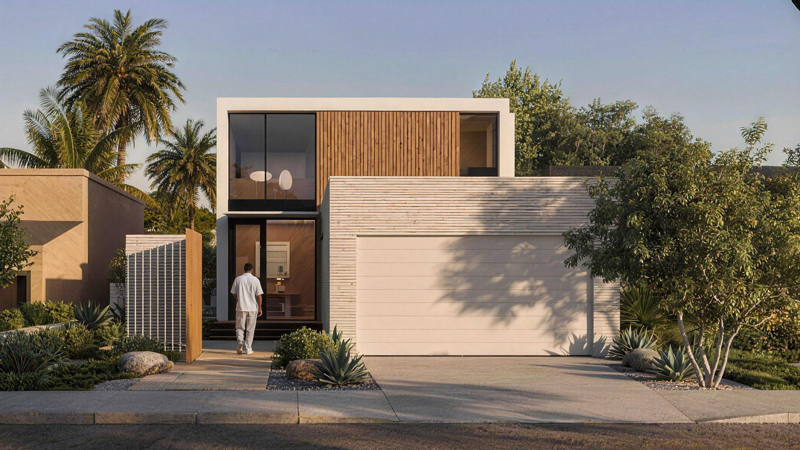
Cognitive bias remains an important obstacle. Jason Zoss, Managing Partner of Cutler Construction, stated that the public still equates modular housing with "mobile homes and trailer houses", believing they are ugly and lack aesthetic appeal. To address this, enterprises focus on customized design, cooperating with professional factories to create products with both appearance and quality, suitable for various community scenarios.
The cost advantage is significant. State Senator MD Rahman estimates that the construction cost of modular buildings is 10%-25% lower than traditional construction, and the delivery cycle is shortened by 40%, which can quickly fill the housing supply gap and ease the housing pressure on low- and middle-income families.
The bill has caused industry divisions: supporters believe it simplifies approval, lowers thresholds, can quickly replenish inventory, and adapts to rigid demand; opponents point out that the bill may allow modular housing to gain unexpected advantages, squeeze the traditional housing construction market, and blur the definition of affordable housing—without clarifying the 40-year price stability constraint, which may lead to "fake affordable housing" arbitrage.
Overall, the bill pursues a balance between "efficiency and quality", not only releasing cost advantages but also preventing chaos through low-point conversion, providing a policy reference for all U.S. states.
Facing the nationwide housing shortage, California, Oregon, and other states have made efforts from multiple dimensions such as approval, funds, and standards, forming a policy pattern of "state-led, multi-point breakthroughs".
As a leader, California has activated the modular ADU market through the SB9 bill, allowed independent property rights transactions of ADUs through the AB1033 bill. The inspection rate of Boxabl enterprise has been reduced to 25% and its production capacity has increased by 75%. After the Los Angeles wildfire, modular houses were delivered within 6 months, becoming the main force in reconstruction.
Oregon has allocated 20 million US dollars through the HB 2001 bill to establish a "Modular Housing Development Fund", which is specifically used to support rigid demand scenarios such as post-disaster reconstruction and low-income housing, solving the supply bottleneck.
Colorado has introduced the SB25-002 bill, which will formulate a unified state-wide modular building code by July 2026, ending conflicts in local rules. Some enterprises have achieved an efficient model of delivery and occupancy within 6 weeks.
Michigan's MSHDA Mod program has been made permanent, providing up to 224,500 US dollars in repayable grants; Utah, Illinois, and Texas have promoted modular development by simplifying approval, clarifying standards, and relaxing land use restrictions respectively.
The federal ROAD Act (Revitalizing Opportunity for Affordable Dream Act) requires HUD to eliminate financing discrimination against modular housing, open low-interest loans and tax credits, and clarify its official definition. After its implementation, the proportion of modular apartments is expected to increase from 8.8% to more than 20%; the LIHTC policy provides 9% tax rebates for modular affordable housing projects, attracting private developers to participate.
A special report by local U.S. media KSN pointed out that modular construction is a key solution to the housing crisis. Factory prefabrication can achieve delivery within 6 weeks, with a cost 10%-25% lower. Enterprises in Colorado have launched more than 500 rigid-demand housing units within three years through modular methods. Although it is still necessary to solve the problems of cognition and standards, it has become a consensus in the industry and policy circles.
The core advantages of modular apartments have been verified by data, becoming the core driving force for their development.
In terms of cost and efficiency, the construction cost is 10%-25% lower, the delivery cycle is shortened by 40%-50%, labor is reduced by 30%, and material waste is reduced by 90%. The "factory prefabrication + on-site assembly" model avoids many restrictions of on-site construction, achieving "low cost, high efficiency, and high quality".
Market penetration continues to increase. In 2024, the proportion of modular multi-family housing reached 8.8%; from 2024 to 2029, the market size will increase from 7.1 billion US dollars to 11.3 billion US dollars, with a growth rate of 60.6%; the North American market will reach 48.65 billion US dollars in 2025 and is expected to exceed 80.99 billion US dollars in 2034, with a CAGR of 5.52%.
At present, 30-40 U.S. states have special regulations. 45% of urban development projects include modular components, and 10%-15% of affordable housing adopts modular construction. Post-disaster reconstruction, student apartments, etc., have become the main application scenarios with strong adaptability.
Modular apartments still face three core challenges in their transformation to mainstream: first, the public's "cheap and low-end" stereotype has not been completely changed, and the acceptance in high-end communities is low; second, although state-level standards are gradually unified, local resistance and acceptance differences still exist, and 40% of exported products are returned due to non-compliance; third, there is a contradiction between enterprise profitability and the 40-year price stability constraint of affordable housing, which is prone to "fake affordable housing".
Short term (1-2 years): Bills in Connecticut, California, and other states will be implemented, policy dividends will be concentrated, rigid demand scenarios such as affordable housing and ADUs will be prioritized, and enterprises will accelerate capacity expansion.
Medium term (3-5 years): State-level standards will be popularized, financing barriers will be eliminated, modular housing will account for 15%-20% of multi-family housing, customized design will be mature, cognitive biases will be broken, and the industry will enter a stage of "dual improvement in quality and scale".
Long term (5+ years): It will become the standard for affordable housing and the first choice for high-density urban development. The industrial chain will be mature, the cost will further decrease, and it will be deeply integrated with green buildings and smart homes, with a service life of 30-50 years and a quality guarantee period of 10-20 years, comprehensively aligning with traditional cast-in-place construction.
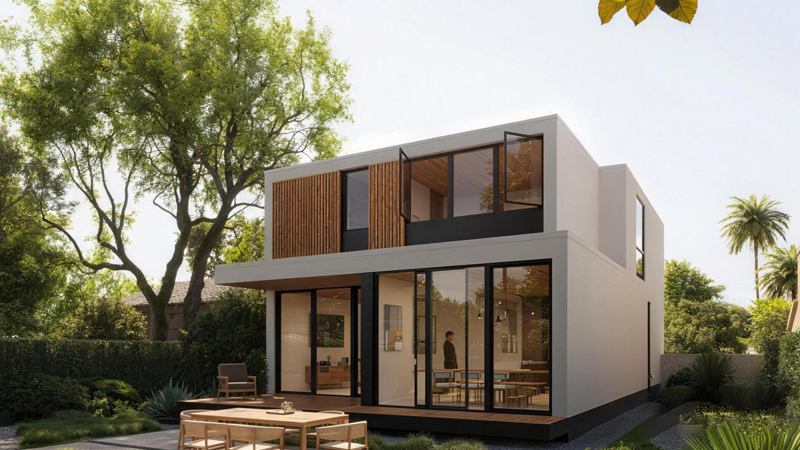
First, policy positioning: focus on states with relaxed policies such as California and Oregon, and connect with supportive policies such as 8-30g and low-interest loans; second, product breakthrough: focus on customization and high appearance, learn from Cutler Construction's path to break cognitive biases; third, compliance first: obtain ICC/MBI certification and pay attention to standard updates; fourth, scenario focus: prioritize rigid demand scenarios such as affordable housing and ADUs, and expand into fields such as hotels and hospitals.
The development of U.S. modular apartments is the result of the joint action of policies, market, and technology. It is gradually getting rid of the label of "cheap substitute" and becoming the mainstream solution to alleviate the housing shortage. Although facing many challenges, with policy optimization, technological upgrading, and cognitive transformation, its development prospect is broad. Practitioners can seize the opportunity of industry transformation by grasping policy orientation, focusing on product innovation, and adhering to the bottom line of compliance.