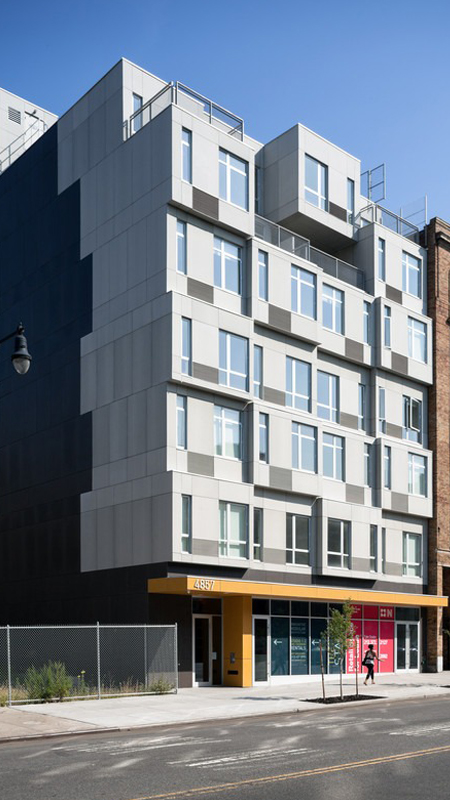
In 2026, North America’s residential construction sector is undergoing a tangible structural shift. Regional prefab factory expansion across Canada, established U.S. building material giants stepping into modular systems, and rapid scaling of micro-factory models by innovative startups are reshaping the market. Modular and prefabricated housing is no longer a niche alternative but has entered a mainstream growth phase. At the core of this industry transformation lies a clear shift: residential production is moving away from large centralized factories toward localized, small-scale, rapidly deployable distributed micro-factory networks. A full-chain restructuring of North American housing industrialization is well underway.
1. Major Building Material Players Enter the Fray, Endorsing Industrialized Construction
For years, modular and prefab housing faced a key limitation: viable in application but lacking recognition from top mainstream supply chain leaders, leaving the industry confined to marginal development. This landscape has now fundamentally changed.
CertainTeed, a leading North American building materials supplier, has launched the One Precision Assemblies (OPA) panelized system. Supported by two mature manufacturing facilities on the U.S. East Coast, the brand produces standardized prefabricated wall, floor and roof components for fast on-site assembly, enabling weathertight building envelopes within just a few days.
This panelized solution directly addresses longstanding pain points in traditional construction: schedule instability, weather delays, material waste and on-site inventory losses. Beyond efficiency, factory precision manufacturing easily aligns with net-zero energy and Passive House performance standards. High-performance green housing no longer relies on inconsistent on-site workmanship, but on stable industrialized production.
The entry of legacy construction giants marks the formal integration of modular construction into North America’s mainstream housing supply chain, representing a genuine turning point for the sector.
2. Canada’s Government-Enterprise Collaboration: Capacity Expansion & Nationwide Distributed Layout
While U.S. brands focus on systematic product iteration, Canada prioritizes bridging regional housing supply gaps through government funding and local factory upgrades.
Good Way Homes, a British Columbia-based homebuilder, secured CAD 625,000 in provincial manufacturing workforce grants to launch a new 17,000-square-foot modular facility. The new plant will boost production capacity by 20 times and create 27 local jobs, focusing entirely on net-zero prefabricated residential units.
The company’s long-term strategy moves away from oversized single factories, planning a network of small-scale modular facilities across Canada. Distributed production allows manufacturers to respond directly to regional housing shortages and adapt to the country’s harsh, cold-climate building requirements.
Meanwhile, Quebec-based MODS Inc. specializes in volumetric steel modular construction. Structural frames, MEP systems and interior finishes are fully completed in controlled factory settings, with on-site delivery and assembly drastically cutting project timelines. With over 4,000 completed modules operating across four Canadian provinces, the scalable potential of industrialized prefab housing has been fully proven.
3. The Rise of Microfactories: Localized On-Demand Production Reshapes Manufacturing Logic
The most disruptive innovation in this wave of industry change lies not in materials or design, but in the reorganization of production models.
Traditional modular construction depends on large centralized plants, which face high long-distance transportation costs, limited adaptation to local zoning codes and lengthy launch cycles. The emerging microfactory model is rewriting these operational rules.
Reframe Systems, a Massachusetts-based startup founded by former Amazon Robotics executives, brings warehouse-style distributed logistics thinking to residential development.
Each microfactory spans 50,000 to 60,000 square feet, with a streamlined 100-day deployment timeline and an annual output of roughly 250 single-family homes. Strategically located near urban markets, these compact facilities enable localized on-demand manufacturing, lower transit expenses, flexible compliance with municipal building codes and higher customization compared to conventional large-scale factories.
Backed by USD 20 million in Series A funding, Reframe targets a production cost below $100 per square foot to compete in high-cost North American housing markets. The brand aims to deliver 200 homes annually by 2027 before replicating its microfactory network nationwide. The industry consensus is clear: future prefab capacity will prioritize flexibility and proximity over sheer scale.
Digital technology underpins this new operational model. MODS Inc. partners with Dassault Systèmes to implement digital twin solutions, unifying design, manufacturing, transportation and on-site installation data throughout the building lifecycle. Proactive conflict detection and precision engineering reduce rework and construction risks, bringing modular housing to industrial-grade manufacturing standards.
4. Market Expansion & Policy Support, Amid Persistent Regional Barriers
Driven by severe housing shortages, labor shortages and policy incentives, the North American modular and prefab housing market continues steady expansion.
According to the Modular Building Institute (MBI), the regional modular construction market reached $24.5 billion in 2025, with a projected rise to $33.2 billion by 2030. Combined industry data confirms the broader prefab housing market exceeding $32 billion in 2025, on track to approach $50 billion by 2031 with a steady CAGR above 6.7%.
Federal and regional policies provide strong tailwinds for industry growth. U.S. infrastructure legislation offers up to 30% tax credits for modular affordable housing projects. The
21st Century Road to Housing Act promotes pre-approved standardized design catalogs, streamlining cross-jurisdictional permitting processes.
Canada has integrated modular construction into mainstream green building rating frameworks, prioritizing factory-built solutions to meet national net-zero construction targets. Unified energy codes across U.S. federal housing programs further reduce operational costs and carbon emissions.
Mounting market demand remains the strongest catalyst. Canada needs 3.5 million new housing units by 2030 to restore affordability, while the U.S. faces a nationwide shortage of millions of homes.
Construction labor scarcity continues to drive up expenses, with labor accounting for over 60% of median housing costs. Factory-controlled prefabrication minimizes on-site labor reliance, stabilizes timelines and contains overall expenses, perfectly matching fast-delivery requirements for institutional rental housing investors.
Even so, substantial hurdles remain. Fragmented local zoning regulations and inconsistent building codes hinder cross-regional module distribution, with no unified cross-state or cross-provincial certification framework in place.
Traditional construction labor unions express concerns over job displacement brought by industrialized building methods. Material segmentation also persists: wood-frame prefab dominates current market share, while high-growth concrete prefab solutions require further market penetration.
5. Low-Carbon Transition: From Energy Efficiency to Positive-Energy Residential Design
Amid global decarbonization goals and climate action initiatives, modular and prefabricated housing has evolved beyond an alternative construction method into a core solution for low-carbon development.
Major green building certification systems, including LEED and BREEAM, have introduced dedicated incentives for off-site construction, recognizing reduced material waste and lower embodied carbon from factory production. Both U.S. and Canadian regulators now classify modular development as a key contributor to national net-zero roadmaps.
Leading builders have fully operationalized carbon-neutral and positive-energy housing designs. Boston-based Bensonwood delivers high-performance factory-engineered wood structures with high-performance glazing and airtight enclosure systems, creating ultra-low-energy homes with on-site power generation.
Residents not only achieve full energy self-sufficiency but also donate surplus electricity to local community support organizations, reshaping public perception of prefab living as an eco-conscious lifestyle choice.
Recyclable steel modular systems and high-efficiency OPA panelized assemblies support widespread net-zero adoption. With superior thermal mass performance, concrete prefab components gain growing traction amid stricter climate risk underwriting standards, with market volume projected to double in the mid-term future.
6. Three Core Industry Shifts: Housing Evolving from On-Site Building to Industrial Production
Reviewing 2026’s key industry developments, three definitive transformation trends are redefining the fundamentals of residential industrialization across North America.
First, construction is transitioning to manufacturing. Labor-intensive on-site wet trades are gradually giving way to off-site factory production. Job sites now function primarily as assembly hubs, delivering consistent quality, fixed schedules and predictable cost control.
Second, centralized production is shifting to distributed manufacturing. Oversized centralized mega-factories are being replaced by regional microfactory clusters, eliminating long-haul logistics burdens, simplifying regulatory compliance and meeting localized customized housing demands.
Third, residential buildings are shifting from energy consumption to energy generation. Next-generation modular homes exceed basic energy-saving standards, achieving full-lifecycle carbon neutrality. An increasing number of developments deliver surplus clean energy to local grids, becoming integral to regional climate action strategies.
7. Conclusion
2026 stands as the critical inflection year for North American modular and prefabricated housing.
Driven by enterprise expansion, model innovation, policy support and urgent market demand, housing industrialization is scaling from limited pilot projects to large-scale mainstream adoption.
Moving forward, residential development will no longer rely solely on traditional on-site construction, but on standardized, digitalized and distributed industrial manufacturing.
Facing overlapping challenges — housing unaffordability, labor shortages and carbon reduction targets — modular and prefab development is reinventing not only building techniques, but the entire future of the North American residential industry.