As global climate change intensifies, California has become a hotbed for extreme wildfires. Successive disasters including the Eaton Fire, Woolsey Fire, and Bobcat Fire have swept across the region, leaving countless families homeless. When rebuilding after the fires, local residents have dramatically changed their homebuilding choices. Traditional on-site stick-built wooden homes are no longer favored. More and more disaster-affected families are turning to fireproof and earthquake-resistant modular prefab homes. This major shift is clearly reflected both in NPR’s on-the-ground coverage of the Altadena community and industry market data.
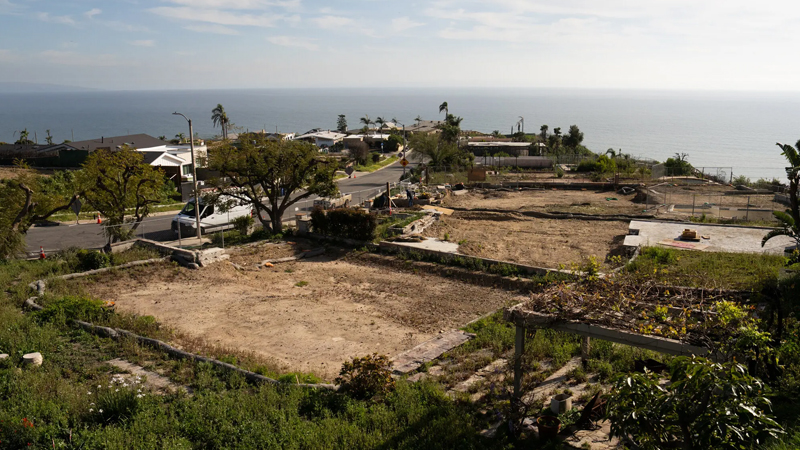
Jason and Colleen Warnesky of Altadena are typical examples. The couple survived the 2009 Station Fire and the 2020 Bobcat Fire without damage to their home. They believed the 2025 Eaton Fire was far enough away to be safe, but the wildfire completely destroyed their 1,400-square-foot family residence. After enduring the disaster and lengthy insurance claims processes, the Warneskys decided to abandon traditional construction. Along with dozens of neighboring families, they chose to rebuild with prefabricated modular homes.
Safety was their core motivation. Colleen explained that she simply wanted a home that would no longer leave them living in constant fear of future fires. Another Altadena couple, the Mennises, also lost their 1940s home in the Eaton Fire. They initially planned to rebuild a traditional stick-built house. After consulting architects, they learned modular homes could be fully customized and decided to work with a professional modular builder to create their ideal new residence.
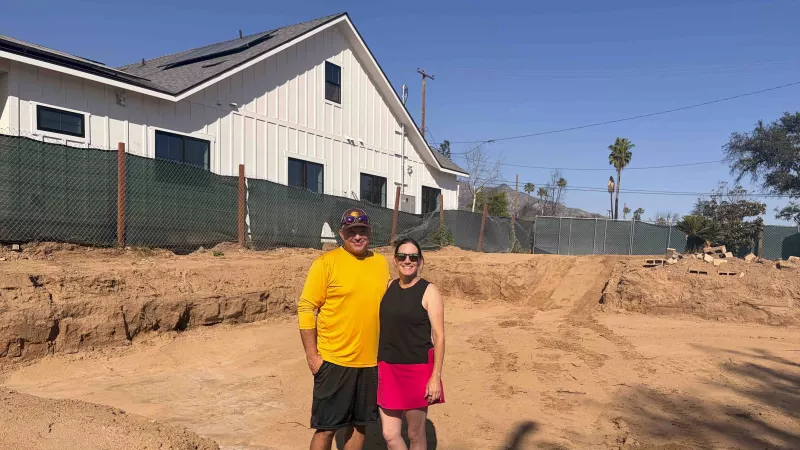 After the 2025 Eaton Fire, Jason and Colleen Warnesky of Altadena, California, chose to rebuild their home with a prefabricated house.
Market data further confirms this trend. By 2024, nearly 21 million people across the United States lived in manufactured and modular homes, which accounted for more than 9% of all new housing starts. Disaster-prone states including California, Texas, and Florida represent the largest markets. Modular construction has evolved from a niche option into the mainstream choice for California’s post-wildfire reconstruction.
Four major construction methods are commonly used for post-disaster rebuilding in California, and modular prefab housing clearly outperforms all alternatives.
1. Traditional wood-frame stick-built homes Once the most common housing type in suburban California. Benefits include mature construction techniques, lower initial pricing, and flexible on-site adjustments. However, critical weaknesses include highly flammable wooden structures, poor fire and earthquake resistance, easy collapse during wildfires, and high long-term maintenance costs. This building method is gradually being phased out in fire-risk zones.
2. On-site reinforced concrete construction Strong structure and better fire resistance than wood homes. Major disadvantages include extremely long construction cycles of 12 to 24 months, frequent delays, and the need for families to rent housing long-term during rebuilding. High material waste and expensive labor make overall costs unaffordable for most disaster victims.
3. On-site welded steel homes Non-flammable steel frames offer better fire and earthquake performance than wood. However, construction is complex, requiring professional welders. Customization costs are high, build times still exceed six months, and exterior designs are limited, limiting widespread adoption.
4. Prefabricated modular steel homes — the best overall solution Most construction is completed in factories, with only on-site assembly required. Built entirely with non-combustible, fire-resistant materials, these homes offer superior fire, earthquake, and hurricane resistance. Shorter build times, transparent pricing, and full design customization deliver safety, practicality, and modern aesthetics.
The growing preference for modular homes stems from their advanced material composition and fire-resistant structural design, far exceeding the safety standards of traditional housing.
Wildfire zone dedicated modular housing eliminates all flammable wood materials. Structures use hot-dip galvanized steel frames, fire-resistant cement fiber boards, and flame-retardant rock wool insulation panels. The Warnesky’s new home features glass, steel, and concrete construction, completely removing flammable redwood decks used in their old house.
Specialized fireproof sealing is applied to eaves, windows, roofs, and exterior walls with no combustible exterior decorations. Standard wall panels provide 30 minutes of fire resistance, upgradable to one hour with additional cement board protection, providing critical escape time for residents. Modular steel panels are more flexible than wood frames for improved earthquake resistance, and exterior fiberglass layers offer protection against Category 5 hurricanes. These homes integrate fire, earthquake, and wind resistance in one durable building system.
Disaster survivors urgently need fast rehousing and predictable budgets — two areas where modular construction completely outperforms traditional building methods.
Traditional wood and concrete homes take one to two years to finish; standard steel homes still require six months or longer with frequent delays. Over 80% of modular home construction is completed in factories. On-site installation and finishing take only three to six months, greatly reducing temporary housing burdens for displaced families.
Traditional on-site construction suffers from unpredictable changes, material waste, and hidden costs that easily blow budgets. Factory-produced modular homes reduce material waste and standardize processes, costing 20% to 30% less than traditional homes of the same size. Pricing is clear and transparent, perfectly matching fixed insurance settlement budgets for fire victims.
Aesthetic Upgrade: From Basic Box Units to High-End Custom Residences
Modular homes are no longer the plain, boxy structures of the past. California’s modern modular building industry has fully transformed. Professional manufacturers use 3D modeling to split personalized architectural designs into modular units for factory production and on-site assembly. Styles range from simple modern family homes to Spanish revival and luxury villa designs. Interiors, courtyards, and layouts are fully customizable, visually indistinguishable from traditional high-end houses. Even an 8,000-square-foot luxury mansion rebuilt after the Woolsey Fire used modular customized construction, setting a benchmark for high-end post-disaster rebuilding.
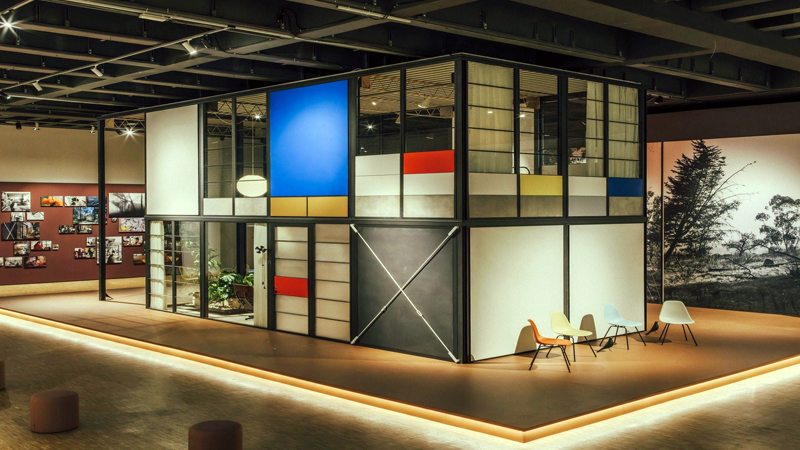 Eames Office partners with Spanish furniture brand Kettal to create a universal modular system.
Frequent wildfires in California have reshaped the state’s rebuilding priorities. Safety, speed, and cost efficiency have replaced old building traditions. Wood-frame homes are declining due to fire risks, while concrete and standard steel construction are limited by long timelines and high costs. With strong fire-resistant materials, comprehensive disaster resistance, fast construction cycles, transparent pricing, and full customization, modular prefab housing has become California’s optimal wildfire rebuilding solution.
Large areas of fire-ravaged land in California still await reconstruction, and rebuilding communities will take time. On these waiting lots, innovators continue testing new construction technologies including composite concrete, adobe, precast panels, and advanced modular systems to reduce labor costs and further improve fire protection. More modular housing companies are emerging, bringing better, more efficient rebuilding solutions.
Supported by mature modular building systems, prefab homes are no longer temporary emergency shelters — they are safe, durable, long-term residences. California’s modular rebuilding model offers a replicable blueprint for disaster reconstruction across all climate-risk regions worldwide.