America’s ongoing affordable housing shortage has grown from a long-standing social challenge into a top government priority at both state and federal levels. While the typical household earns roughly $85,000 per year, the average price for a single-family stick-built home has climbed above $400,000, putting traditional homeownership out of reach for most middle-income working families. Compounding the problem, industry workforce data shows nearly 41 percent of skilled construction workers will retire by 2031, leaving residential builders facing persistent staffing shortages and project delays across the country.
With traditional on-site homebuilding stuck in a cycle of expensive labor, slow delivery schedules and widespread staffing shortfalls, customized modular housing has gained strong industry traction. These homes are fully constructed in factory facilities in separate sections, then transported and quickly assembled on local building lots, offering governments, real estate investors and residential families a reliable, cost-effective alternative for new housing development and community rebuilding.
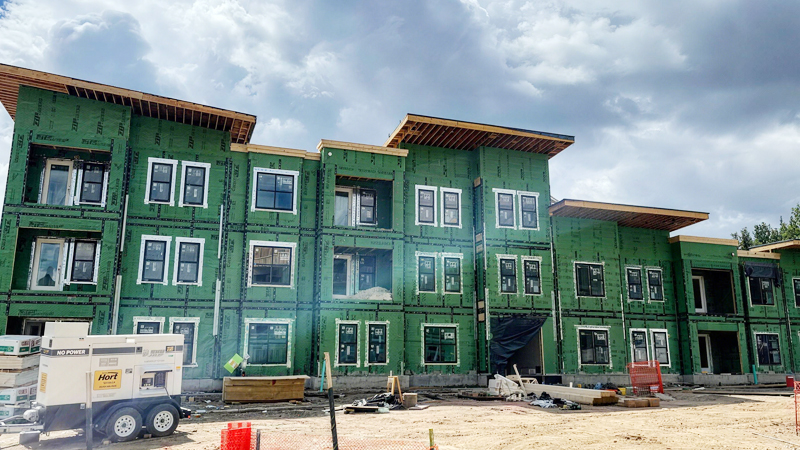
Policy Landscape: Historic Legislative Breakthroughs for Federal Modular Construction Regulatory Reform
Over the past month, federal housing policy in the United States has delivered the most meaningful progress for the modern modular and prefab housing sector in recent years, led by major legislative action in Congress.
The 21st Century Affordable Housing Development Act advanced rapidly through federal lawmakers, passing the U.S. House of Representatives with a lopsided 390-9 bipartisan vote before clearing a revised version in the Senate weeks later. The rare cross-party agreement marks a major policy milestone for the residential construction industry, unlocking new federal support for alternative homebuilding methods.
The bill includes targeted provisions designed specifically to expand the modular housing market. Section 302, officially named the Modular Housing Production and Standardization Act, directs HUD to thoroughly review all FHA construction financing programs, identify key financing barriers holding back small and mid-sized modular developers, and update national building codes for factory-built residential properties. The legislation also approves federal funding to research unified construction standards that can streamline modular home development nationwide.
Additionally, the new law removes the mandatory requirement for manufactured homes to have permanent steel chassis structures and solidifies HUD’s authority to set consistent fire safety and energy efficiency rules for all factory-built housing. This key regulatory shift unlocks greater design flexibility and lowers overall construction and long-term maintenance costs, especially critical for post-disaster rebuilding projects in high-risk regions.
On the executive side, President Trump signed an executive order to cut red tape for affordable modular housing development. The order requires HUD to release standardized best-practice guidelines for state and local governments by May 12, 2026, focusing on faster construction approvals and updated local building code regulations to speed up modular home permitting.
Market Dynamics: Institutional Capital Investors and Major Cities Accelerate Strategic Layout in Modular Real Estate
Federal policy momentum has quickly attracted strong interest from institutional investors, who are now actively funneling capital into the fast-growing modular real estate sector.
Drake Real Estate Partners closed its fifth flagship real estate fund at over $515 million, prioritizing investments in high-quality manufactured housing communities. GMF Group followed with a $250 million second fund focused on acquiring and operating manufactured housing assets across the United States for steady long-term returns.
Major cities are also adopting modular construction as a practical solution for affordable housing supply and neighborhood revitalization.
St. Louis is using modular development to rebuild historic residential areas. The city’s development agency approved a pilot project to build roughly ten new modular homes on vacant lots in the historic North St. Louis Ville neighborhood. Built by local modular specialist Module Building Systems and funded by a $3.2 million American Rescue Plan grant, the homes will serve low-to-middle-income households and are scheduled for completion by late 2026.
New York City is expanding modular housing in its outer boroughs to tackle limited land availability. Developer Urban Ecospaces is developing 23 modular residential units on Staten Island, offered to middle-income buyers through the city’s affordable housing program, priced between $300,000 and $500,000. The developer confirmed modular construction cuts build timelines by 30 to 50 percent, delivering finished homes in a fraction of the time required for traditional builds.
Boulder, Colorado, has combined modular home production with local vocational training. The BoulderMOD initiative partners the city, local school district and Habitat for Humanity to operate a modular housing factory that trains new construction workers while building affordable residential units onsite.
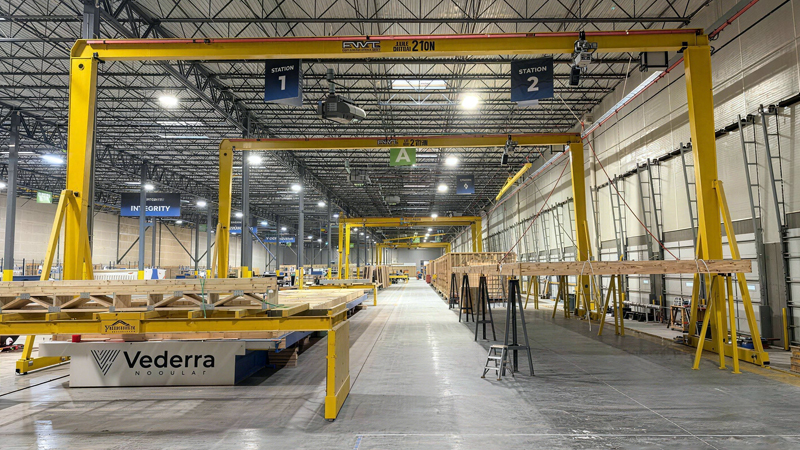
Technological Advancements: Cost-Saving and Fast-Build Efficiency Advantages of Modular Construction Become Increasingly Clear
Controlled project costs and much faster delivery timelines are the biggest market advantages for modern modular prefab homes over traditional stick-built construction. The global modular construction market reached $103.5 billion in 2024 and is projected to rise to $162.4 billion by 2030, with steady annual growth year over year.
Factory prefabrication for modular units typically takes only one to two months, with onsite assembly finished in two to four weeks. Traditional homebuilding, by contrast, often drags on for six to twelve months with constant delays. Modular projects also reduce overall construction expenses by 10 to 20 percent, making homeownership achievable for many families priced out of conventional housing markets.
Ongoing construction innovation continues to strengthen the modular industry. Many builders now use robotic assembly tools and simplified workflows, letting new workers handle complex construction tasks while gaining valuable transferable job skills. In California, state officials are exploring advanced methods including fire-resistant building materials, 3D-printed home structures and AI-driven design optimization to reshape the future of residential construction efficiency.
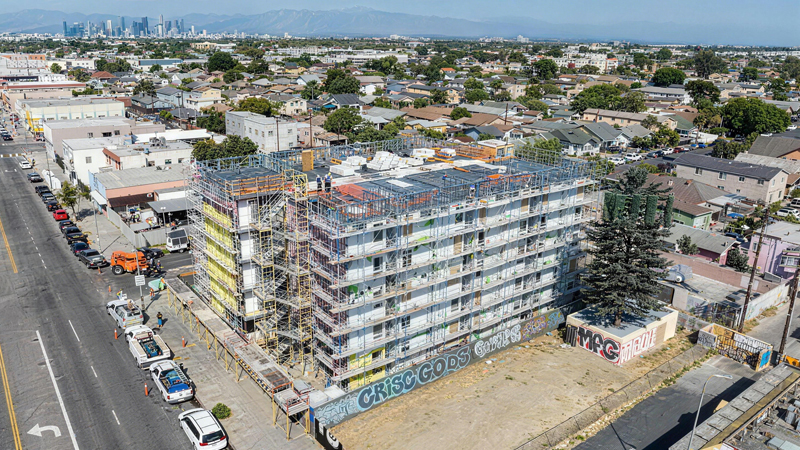
Challenges and Barriers: Large-Scale Market Promotion of Modular Housing Still Needs Long-Term Breakthroughs
Despite strong industry growth, modular housing still faces real obstacles to nationwide large-scale adoption.
Financing remains the biggest hurdle. While nine states have eased zoning rules for modular and manufactured homes, mortgage loans for factory-built properties are still harder and more expensive to obtain. Many local regulations still classify modular homes as personal property instead of real estate, creating higher financing barriers for homebuyers.
Rising operational costs are also squeezing investor returns. Higher insurance premiums, especially in wildfire and extreme weather zones, are lowering projected net income for modular housing community operators.
Labor union politics add another layer of complexity. California’s governor openly acknowledged that rapid construction technology upgrades carry political risks with labor groups, but stressed that housing affordability pressures leave no room to delay necessary industry changes.
Outlook: Modular Housing Is an Effective Long-Term Housing Solution, Not a One-Time Emergency Panacea
Industry recognition now positions modular housing as a permanent mainstream solution, not just temporary emergency shelter. Architectural media named Next Modular the top U.S. modular home manufacturer of 2026 for its quality craftsmanship, custom design options and sustainable building practices, reflecting a clear industry shift in perception.
Analysts remain cautiously optimistic. Researchers at the Pew Charitable Trusts note that manufactured modular homes can fill the gap for affordable entry-level housing without heavy government subsidies, but modernizing the financing system is essential for long-term growth.
Overall, America’s modular housing boom stems from housing shortages, labor shortages, technological progress and federal policy reforms. Future industry expansion will depend on final federal legislative coordination, improved financing support and balanced local community planning between job protection and new housing supply.